
Border guards' drone strikes destroy Russian artillery, radar and EW systems in Slobozhanshchyna
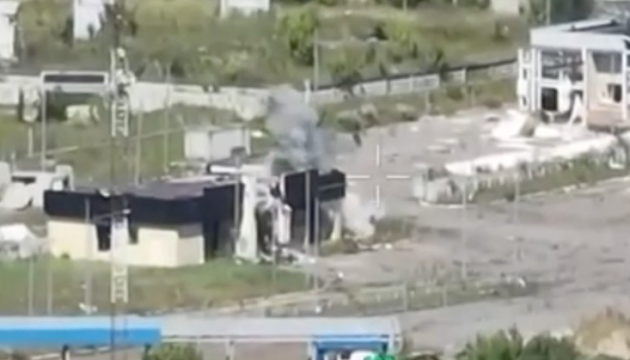
The 105th Border Guard Detachment has intensified unmanned aerial operations in the Northern Slobozhanshchyna sector, conducting daily strikes against Russian military equipment including artillery guns, electronic warfare systems, and radar installations, according to Ukrinform.
Pilots operating with the 105th Border Guard Detachment, named after Prince Volodymyr the Great, have established a consistent operational tempo targeting enemy defensive infrastructure in the Northern Slobozhanshchyna region—a strategically significant area along Ukraine's northeastern border with Russia, spanning parts of Kharkiv and Sumy oblasts. The detachment's unmanned aerial vehicle (UAV) operations focus on high-value military targets including field artillery positions, radar systems used for targeting and air defense coordination, and electronic warfare equipment deployed by Russian forces. Such systems represent critical components of Russia's battlefield capability, and their destruction reduces the enemy's capacity to coordinate fire support, detect Ukrainian movements, and conduct effective electronic countermeasures.
The Northern Slobozhanshchyna sector has remained an active area of operations throughout the full-scale invasion, with Ukrainian forces conducting persistent counter-strikes against Russian positions and equipment. Border Guard units, operationally subordinate to the State Border Guard Service of Ukraine, have increasingly deployed drone technology as a cost-effective method to degrade enemy capabilities across frontline areas. The systematic targeting of guns, radars, and EW systems reflects a broader Ukrainian strategy to attrit Russian military potential through precision strikes on infrastructure rather than costly direct engagement, allowing smaller units to maintain sustained pressure on numerically larger opposing forces.
Чому це важливо
Destruction of Russian artillery, radar, and electronic warfare systems degrades enemy coordination, targeting accuracy, and air defense capabilities, directly weakening Russia's operational effectiveness in a key sector. Such losses compound over time, reducing Moscow's ability to sustain offensive operations and making Ukrainian positions less vulnerable to concentrated fire.
Джерело