
Romania's Defense Ministry confirms Russian drone struck residential building in Galați
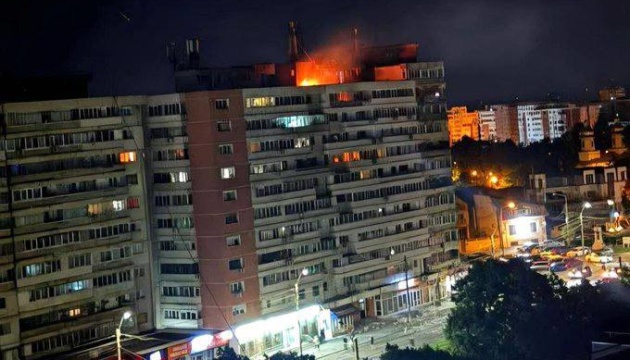
Romanian authorities have officially confirmed that a drone which crashed into an apartment building in the center of Galați was of Russian origin. The incident represents yet another instance of Russian military hardware crossing into NATO territory, intensifying regional security concerns as the war in Ukraine continues.
Romania's Ministry of National Defence made the official determination that the unmanned aerial vehicle, which impacted a residential building in central Galați, originated from Russia. Galați is a significant urban center in eastern Romania situated near the Danube River, placing it in close geographic proximity to the active conflict zone across the border in Ukraine. The confirmation from Bucharest removes any ambiguity about the drone's origin and elevates the diplomatic and military stakes of the incident.
The strike on a civilian apartment building raises immediate questions about the safety of residents in Romanian border regions, as well as the broader challenge of intercepting low-flying drones that may evade conventional radar detection. Загалом, similar incidents involving Russian drone fragments or full UAVs landing on Romanian and Moldovan territory have been reported multiple times since Russia's full-scale invasion of Ukraine began in February 2022, creating a pattern of cross-border incursions that NATO has been forced to monitor with growing urgency.
Romanian officials have not yet released detailed information about casualties or the extent of structural damage to the affected apartment building. However, the fact that a drone managed to reach a densely populated urban area and impact residential infrastructure underscores the vulnerability of civilian populations even beyond Ukraine's borders. Local emergency services and military personnel were deployed to the scene following the incident.
Як відомо, NATO has been grappling with the challenge posed by Russia's extensive use of Shahed-type and other drone variants, which are employed in large swarms and often navigate unpredictable flight paths. The alliance has held consultations on bolstering air defense infrastructure across its eastern flank, particularly in countries like Romania, Poland, and the Baltic states that border either Ukraine or Belarus. This latest confirmed incident is expected to further accelerate those discussions, with pressure mounting on member states to deploy more capable short-range air defense systems capable of neutralizing low-altitude threats before they reach populated areas.
The Galați incident also carries diplomatic weight, as Romania may formally raise the matter within NATO channels and potentially lodge a protest with Moscow. Cross-border drone impacts on alliance territory have historically prompted cautious but firm responses from NATO leadership, who must balance the imperative to defend member states with the need to avoid actions that could be perceived as direct escalation with a nuclear-armed adversary.
Чому це важливо
The confirmed Russian-origin drone strike on a residential building in Galați is significant on multiple levels. First, it demonstrates that the destructive reach of Russian aerial weapons is not contained within Ukraine's borders, and that NATO member states face a tangible, physical threat from munitions deployed in the broader conflict. Romania, as a frontline alliance member on the Black Sea, is particularly exposed. Second, the incident reinforces long-standing concerns about gaps in NATO's lower-tier air defense coverage, especially against cheap, mass-produced drones that can overwhelm detection systems. Third, the targeting — whether intentional or accidental — of civilian residential infrastructure on alliance territory sets a dangerous precedent that demands a credible institutional response from NATO. Failure to respond decisively risks emboldening further incursions, while an overly aggressive posture carries its own escalation risks. The event will likely accelerate ongoing debates within the alliance about rules of engagement for cross-border drone threats and the urgent need to modernize air defense architecture along NATO's eastern flank.
Джерело